Synthesis Essay
My experience and connection to the LLN writing:
For my synthesis essay, I didn’t want my paper to sound like a typical research paper. I still wanted space to connect with readers, making it feel like I was speaking to them directly while providing resources. At first, it was difficult to maintain a smooth flow, especially when moving between sources and shifting perspectives. I often struggled to connect each piece of evidence back to my thesis. However, after multiple peer reviews and a one-on-one session with my professor, I learned strategies to better organize my ideas and transitions, which helped me maintain the flow and consistently tie my points back to my main argument.
First Synthesis Essay draft:
Synthesis Essay
We have an identity, but can the things we face shape our identity? I can talk from my personal experience as an immigrant. I’m still trying to find my identity by finding pieces of my life and combining them together. Racism, sexism, and religion. the big RSR for me. There are more to my identity than just these three. But the more I don’t affect myself I find that these three are the main components. I think as an immigrant who came to this unknown land hoping for dreams and opportunity really shocked me when I realized that it wasn’t just about that. Being young and unable to fully understand why i was facing such discrimination just because i couldn’t pronounce the same words as my peers who wore lighter skin color then me. i thought if i was able to perfect this language then maybe i will be treated equally but that was not the case.
Kassandra Martinchek and Rose Mary Brown, researchers at the Urban Institute, in their 2023 policy report “How Structural Racism Shapes Black Americans’ Sense of Self: Understanding Meta-Oppression and Its Effects in the Credit System,” argue that systemic racism within the U.S. credit system not only limits Black Americans’ access to financial opportunities but also damages their self-worth and future outlook through a process known as “meta-oppression.” Martinchek and Brown support this claim by conducting interviews with Black Chicago residents analyzing their experiences through the lens of meta-oppression theory and using these findings to show how financial barriers, internalized blame, and shame result from centuries of discriminatory policies. Their purpose is to encourage policymakers and practitioners to recognize and disrupt the psychological and structural effects of racism in financial systems in order to promote equity, restore agency, and expand Black Americans’ visions for their financial futures. ”Ultimately, structural racism in the credit system shapes Black people’s self-worth and their beliefs of what is possible in the future—a process known as ‘meta-oppression.’” (p. 2) This quote shows that racism in the credit system doesn’t just create financial barriers, it also affects how Black people see themselves. Constant discrimination can lead to feelings of doubt and hopelessness, shaping their identity in negative ways. It suggests that when a system repeatedly limits someone’s opportunities, it also limits how they view their own potential and self-worth. Robin DiAngelo, a scholar and educator specializing in critical whiteness studies, in her 2016 essay “How Race Shapes the Lives of White People” from What Does It Mean to Be White? Developing White Racial Literacy, argues that white people are deeply shaped by systemic racism in ways that grant them unearned privilege, obscure their racial identity, and maintain racial inequality. DiAngelo supports her claim by combining personal reflection, sociological research, and cultural analysis, drawing on media examples, educational systems, and everyday experiences, to illustrate how white norms define what is “normal” and how white silence and denial perpetuate racial hierarchies. Her purpose is to encourage white readers to recognize and challenge the ways whiteness structures their lives in order to foster racial self-awareness and dismantle the social systems that sustain white privilege. “As I move through my daily life, I fit in; my race is unremarkable. I belong when I turn on the TV, read novels, and watch movies. I belong when I compare myself to standards of beauty… In virtually every situation or context deemed ‘normal’ or valuable in society, I belong racially.” (p. 159). This quote shows how whiteness shapes identity through constant belonging and acceptance. DiAngelo explains that being white allows her to feel comfortable and represented in everyday life, from media to social norms. This sense of effortless inclusion strengthens her confidence and shapes her identity, showing how privilege can create a stable self-image that many people of color are denied. Both passages explore how race deeply influences a person’s sense of self, but from opposite experiences. Martinchek and Brown show that systemic racism causes many Black Americans to internalize feelings of limitation, shaping their identity around struggle, doubt, and constrained possibility. In contrast, DiAngelo reveals that white people’s identities are formed within constant affirmation, a sense of racial belonging so normalized that it often goes unnoticed. The relationship between these texts shows how one group’s exclusion constructs another’s comfort, the very systems that devalue Black identity simultaneously affirm white identity. Together, they demonstrate that racial structures shape how individuals understand their worth and place in the world. From my perspective, these passages show that understanding how race shapes people’s experiences is key to understanding identity. Facing oppression or privilege can change people in powerful ways. For Black individuals, realizing how unfair systems affect their self-image can build strength and unity. For white individuals, seeing how privilege shapes their lives can lead to humbleness and responsibility. Identity isn’t fixed, it can grow and change through awareness, empathy, and action.
Final Synthesis Essay draft:
Identity in the face of RSR
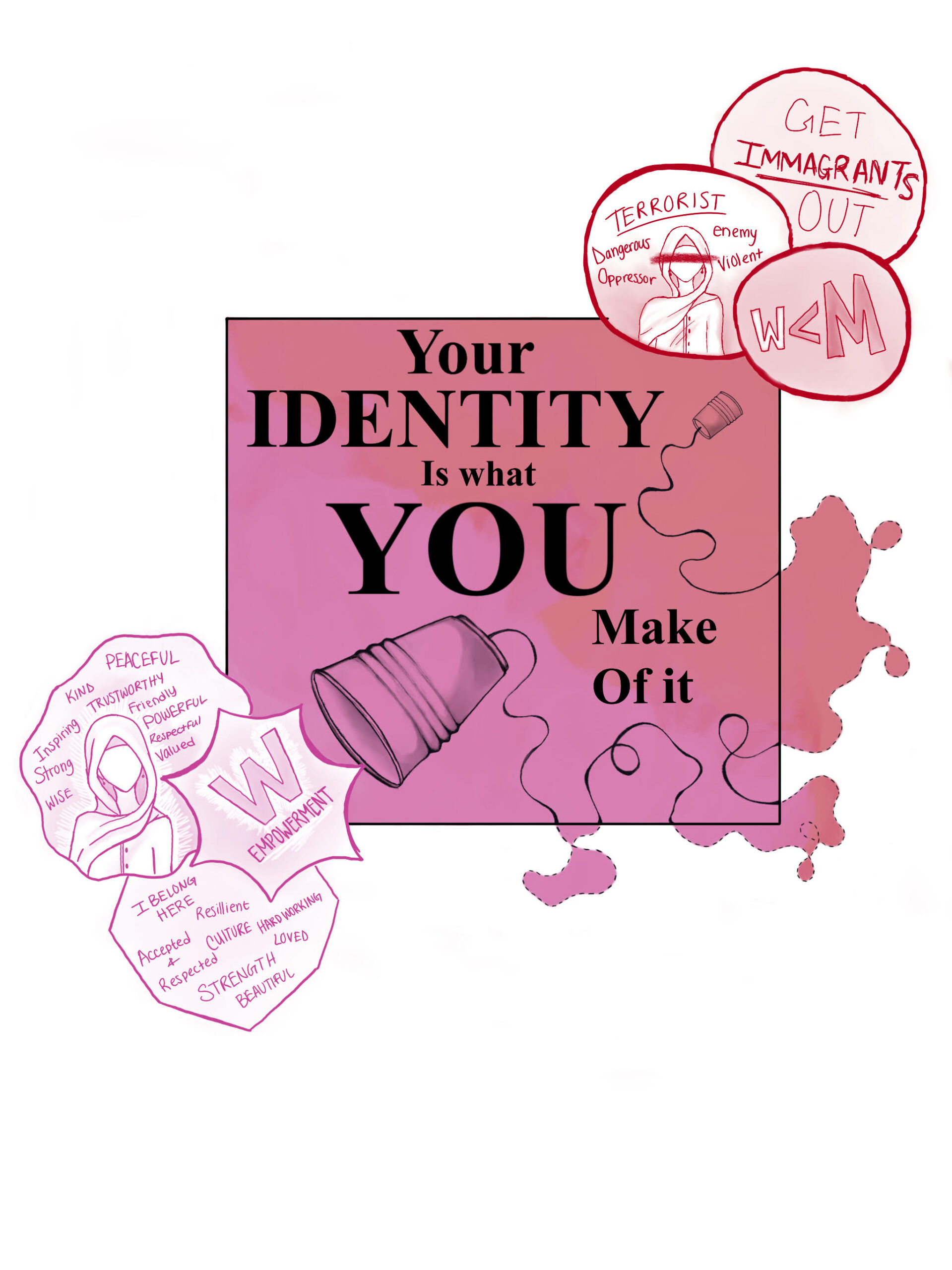
You have an identity, we all do. But can the things we face in society shape our identity? I can talk from my personal experience as a young female Muslim immigrant. I’m still trying to find my identity by putting pieces of my life and combining them together. Racism, sexism, and religion. the big RSR for me. There is more to my identity than just these three words. But I think that these three are central as an immigrant who came to this unknown land hoping for dreams and opportunity. It really shocked me when I realized that wasn’t anything I envisioned. Being young and unable to fully understand why I was facing such discrimination just because I couldn’t pronounce the same words as my peers, who wore lighter skin color than me, or I wasn’t following the same beliefs as them. I thought if I was able to perfect this language or hide my beliefs then maybe I would be treated equally but that was not the case. It took a long time to understand, but the challenges one endures contributes to the core of one’s identity.
Racism isn’t always loud, sometimes it shows up in small comments or looks that make you doubt yourself and that’s why it is important to notice it even when it seems small. This connects to the idea that Kassandra Martinchek and Rose Mary Brown, researchers at the Urban Institute, in their 2023 policy report “How Structural Racism Shapes Black Americans’ Sense of Self: Understanding Meta-Oppression and Its Effects in the Credit System,” argue that systemic racism within the U.S. credit system not only limits Black Americans’ access to financial opportunities but also damages their self-worth and future outlook through a process known as “meta-oppression.” Martinchek and Brown support this claim by conducting interviews with Black Chicago residents analyzing their experiences through the lens of meta-oppression theory and using these findings to show how financial barriers, internalized blame, and shame result from centuries of discriminatory policies. Their purpose is to encourage policymakers and practitioners to recognize and disrupt the psychological and structural effects of racism in financial systems in order to promote equity, restore agency, and expand Black Americans’ visions for their financial futures. “Ultimately, structural racism in the credit system shapes Black people’s self-worth and their beliefs of what is possible in the future—a process known as ‘meta-oppression.’” (p. 2). Racism in the credit system does not just create financial barriers, it also affects how Black people see themselves. Constant discrimination can lead to feelings of doubt and hopelessness. It suggests that when a system repeatedly limits someone’s opportunities, it also limits how they view their own potential and self-worth.
Another example of this can be seen in the work of Robin DiAngelo, a scholar and educator specializing in critical whiteness studies, in her 2016 essay “How Race Shapes the Lives of White People” argues that white people are deeply shaped by systemic racism in ways that grant them unearned privilege, obscure their racial identity, and maintain racial inequality. DiAngelo supports her claim by combining personal reflection, sociological research, and cultural analysis, drawing on media examples, educational systems, and everyday experiences, to illustrate how white norms define what is “normal” and how white silence and denial perpetuate racial hierarchies. Her purpose is to encourage white readers to recognize and challenge the ways whiteness structures their lives in order to foster racial self-awareness and dismantle the social systems that sustain white privilege. D’Angelo illustrates this idea when she states “As I move through my daily life, I fit in; my race is unremarkable. I belong when I turn on the TV, read novels, and watch movies. I belong when I compare myself to standards of beauty… In virtually every situation or context deemed ‘normal’ or valuable in society, I belong racially.” (p. 159). Being white allows her to feel comfortable and represented in everyday life, from media to social norms. DiAngelo effortless inclusion strengthens her confidence and shapes her identity, showing how privilege can create a stable self-image that many people of color are denied.
Looking at these passages together it explores how race deeply influences a person’s sense of self, but from opposite experiences. Martinchek and Brown show that systemic racism causes many Black Americans to internalize feelings of limitation, shaping their identity around struggle, doubt, and constrained possibility. In contrast, DiAngelo reveals that white people’s identities are formed within constant affirmation, a sense of racial belonging so normalized that it often goes unnoticed. The relationship between these texts shows how one group’s exclusion constructs another’s comfort, the very systems that devalue Black identity simultaneously affirm white identity. Together, they demonstrate that racial structures shape how individuals understand their worth and place in the world. From my perspective, these passages show that understanding how race shapes people’s experiences is key to understanding identity. Facing oppression or privilege can change people in powerful ways. For Black individuals, realizing how unfair systems affect their self-image can build strength and unity. For white individuals, seeing how privilege shapes their lives can lead to humbleness and responsibility. Identity isn’t fixed, it can grow and change through awareness, empathy, and action.
Think about how race shows up in your everyday life, even in small ways. Maybe it’s a comment that makes you feel out of place or a situation where people assume things about you without really knowing you. These moments can change how you see yourself and how confident you feel. Some people never have to think about this they go through life without being judged for their skin color. Racism isn’t always obvious. It can be quiet, in the way people treat you or make you feel small. But noticing it helps us understand how it shapes identity and how we can start to change things and be more understanding of each other.
Along with racism, religion also played a major role in shaping my identity. Growing up as a Muslim immigrant in a school where hardly anyone shared my background was really challenging.. Believing in a religion that most people around me didn’t understand or sometimes had negative thoughts about made it difficult to fully be myself. I often felt out of place and sometimes wondered if it would be easier to just hide parts of who I was to fit in. I faced questions about my beliefs, awkward looks, and times when I felt like I didn’t belong.
Journalist and Muslim woman, Anmol Irfan, in her personal commentary, “Misconceptions about Muslims have shaped the way I approach my journalism career — but I’m no longer overexplaining”, published in The Objective, addresses the topic of stereotypes and misconceptions about Muslims in professional settings and argues that these stereotypes have influenced the way she approached her career, but she has learned to embrace her identity confidently without overexplaining her faith. She supports this claim by describing how she used to over-contextualize her Muslim identity in workplace conversations, then explaining how that influenced the type of stories she pitched for publication, and finally sharing how she has grown to reject the pressure to justify her faith professionally. Irfan’s purpose is to reflect on the impact of stereotypes on her professional identity in order to empower other Muslims and encourage workplaces to respect religious diversity for her audience, the readers of The Objective and others interested in the topic of Islam, identity, and workplace challenges. She illustrates the struggle in the quote “I felt myself exhausted from the constant effort to push back against the binaries that Muslim women are boxed up in. … I don’t owe anyone any public explanations for what all the different parts of my identity make me … it’s high time we awarded young Muslims across the world that same safe space.” the emotional burden Muslim women face when constantly confronting stereotypes and societal expectations. It also conveys empowerment, emphasizing the importance of owning one’s identity without having to justify it to others.
Nursing researchers, Rezwana Rahman, Jennifer Lapum, and Nadia Prendergast, in their qualitative research study, “‘Treat Me Like a Person’: Unveiling Healthcare Narratives of Muslim Women who Wear Islamic Head Coverings”, published in the Canadian Journal of Nursing Research, addresses the topic of healthcare challenges faced by Muslim women and argues that their visible religious identity often influences how they are treated in medical settings, affecting both their well-being and sense of dignity. They support this claim by sharing first-person narratives of Muslim women describing assumptions and bias they faced from healthcare providers, then highlighting instances where care providers ignored or misunderstood their needs, and finally discussing how these experiences shaped the women’s sense of identity, resilience, and strategies for self-advocacy. Rahman, Lapum, and Prendergast’s purpose is to illuminate the lived experiences of Muslim women in healthcare settings in order to improve cultural competency and patient respect for their audience, the readers of the Canadian Journal of Nursing Research and others interested in the topic of Islam, identity, and healthcare equity. “Just treat me like a person … how you would treat any other person … We may have a different ethnicity. And we show our religion. But that doesn’t change what’s under the head covering. We’re still a person.” This shows how visible markers of religion, like the hijab, can lead to assumptions or discrimination, but also emphasizes human dignity. It highlights the need for recognition of Muslim women as individuals beyond stereotypes or religious appearances.
Both passages show how being Muslim shapes a woman’s identity and the challenges that come with it. Irfan talks about the emotional stress of always having to explain herself and fight against stereotypes, while Rahman et al. show how visible signs of faith, like the hijab, can lead to assumptions or discrimination in everyday situations. Together, they show that being Muslim involves both internal struggles with identity and external challenges from how others treat you. These experiences can be exhausting, but they also help women become stronger, more confident, and able to stand up for themselves. Overall, the passages highlight how important it is to understand and respect Muslim women as individuals beyond their religion, and how embracing faith can help them grow and feel empowered.
Being a Muslim in a world where most people don’t understand your faith can be really challenging. Sometimes people make assumptions about you based on how you look or what you wear, and other times they question your beliefs or treat you differently without even realizing it. These moments can be exhausting and make you feel out of place, but they also teach you a lot about who you are and what you stand for. Going through those challenges helped me understand myself better and what I truly believe in. I learned to be proud of my faith and my culture and to stand up for my values even when it felt uncomfortable. Facing these experiences helped me grow stronger, more confident, and gave me a clearer sense of my identity and the things that matter most to me.
Our identity is shaped by many things, but at its core, identity grows from the challenges we face. Whether we experience them as children or as adults, we are always learning something new about ourselves, and each experience contributes to the person we are becoming. Some people are able to find their identity at a young age, while others are still trying to understand themselves even in their forties. From my personal experience, I believe that the main roots of my identity come from racism, sexism, and religion. I am still collecting pieces of my identity to make it whole, but the older I get, the more I realize how much the challenges I faced as a child, coming to America and navigating life as a Muslim immigrant, have shaped the way I see myself. These experiences impacted me in negative ways when I was younger, but they also pushed me to grow, to strive to be better, even when I was too young or too naive to fully understand the hate, discrimination, and prejudice I faced based on my background, my religion, and my gender. It was not easy to navigate who I wanted to become in a world that seemed to constantly set limits for me, but as I have grown older, it has become clear that these challenges helped me become a stronger, better version of myself. I have learned to be someone I am proud of, not someone who blends in with societal expectations.
Being an immigrant, a woman and a Muslim has shaped my identity and powerful ways. I am proud to represent my background, stand for myself, and other women exceed expectations set by society and follow my faith, despite prejudice or stereotypes, wearing my hijab, and embracing my beliefs, allows me to be a role model for others while honoring my community. Identity is not only shaped by racism, sexism and religion, but also by countless experiences over time. These challenges have taught me to better understand and love myself, and I know my identity will continue to grow for anyone facing discrimination remember that these struggles do not define you. They can teach you, strengthen you and help you become the best versions of yourself. Our identity is made up of both struggles and victories, and it is to these experiences that we discover who we are truly who we can become
Work Cited
- Martinchek, Kassandra, and Rose Brown. How Structural Racism Shapes Black Americans’ Sense of Self: Understanding Meta-Oppression and Its Effects in the Credit System. JSTOR, 2023
- DiAngelo, Robin. HOW RACE SHAPES THE LIVES OF WHITE PEOPLE. JATOR, 2018
- Hogan, Jeff. Sexism in the Service Industry Is the Focus of Morgan Bukovec’s ‘Are You on the Menu?’ Series. Teen Vogue, 2023
- Godfrey, Holly. How I handled sexism in the service industry. WMC FOBMB, 1018
- Irfan, Anmol. Misconceptions about Muslims have shaped the way I approach my journalism career — but I’m no longer overexplaining. The Objective, 2022
- Rahman, Rezwana, el al. Treat Me Like a Person”: Unveiling Healthcare Narratives of Muslim Women who Wear Islamic Head Coverings Through a Poststructural Narrative Study. Pubmed Central, 2024